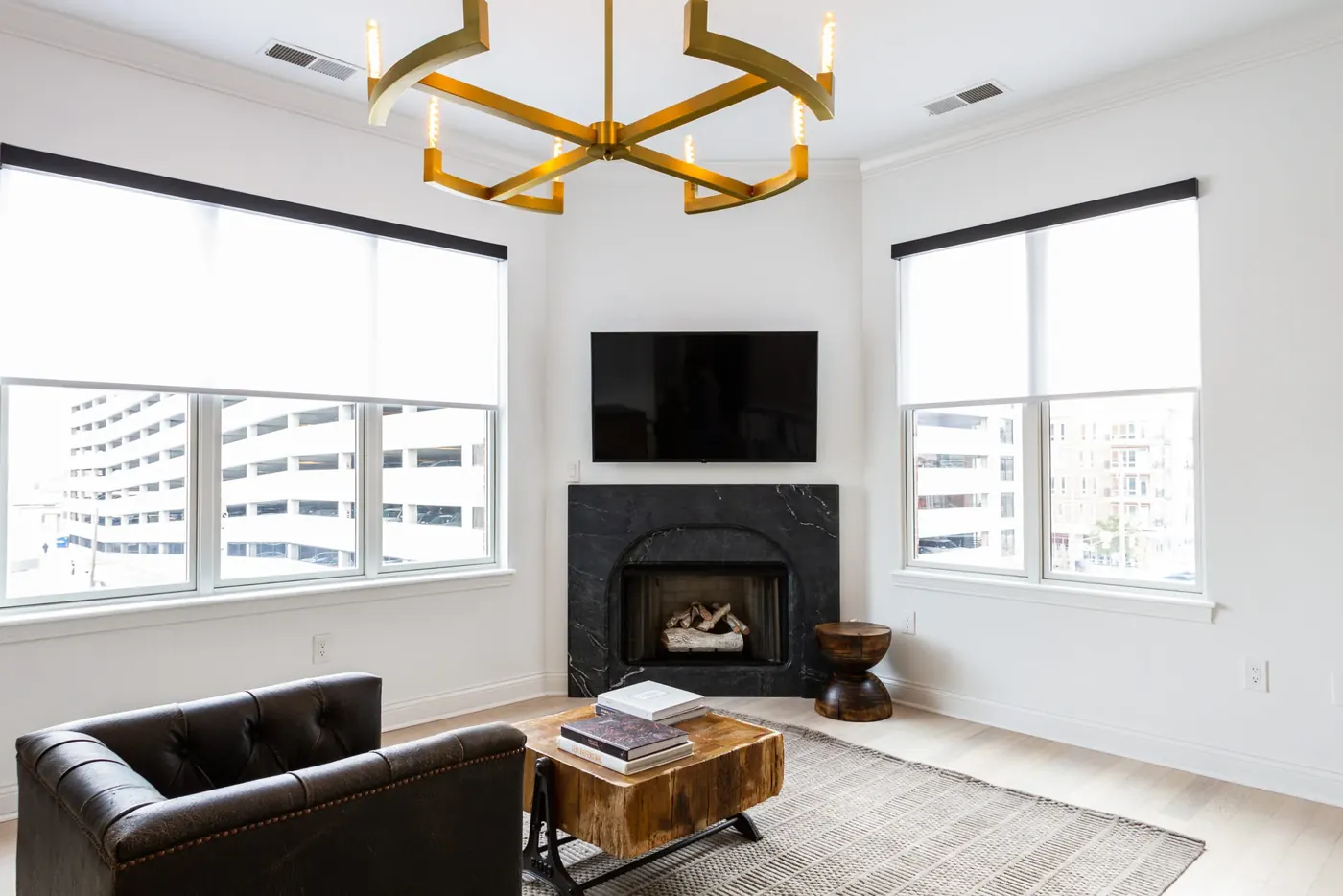
Franklin, IN Top-Down Bottom-Up Shades
Sky at the top, cover across the sight line
Below are the questions people ask about this specific product line. Read the drawbacks as carefully as the benefits, because in this trade the drawbacks are what people remember two years on.
- Service: Top-Down Bottom-Up Shades for Franklin homeowners
- Service area: Franklin, IN and surrounding areas The measure is bookable soon. Fabrication is the fixed cost in time, generally two to five weeks and longer on specialty shapes. If you have a date you're working toward, tell us at the measure and we'll be straight about it.
- Insured and bonded
- Serving Franklin, IN since 2008
Expert Top-Down Bottom-Up Shades for Franklin Homes
Top down bottom up puts two rails on one shade, so you can drop the top rail for daylight while the bottom stays up for cover. Sugar Creek Heights is where the argument is strongest in this city: all 19 parcels front South 600 East with no internal street at all, so there are no interior lots and every house is a road frontage house, with a front elevation facing east or west across a 0.46 acre lot. Southbrook has the same condition on a different road, with its frontage on South Mauxferry Road and 108 parcels assembled through a re subdivision plus two numbered additions.
Two lift paths mean twice the hardware, and that's the trade. A top down bottom up headrail carries a second set of cords or a second spring mechanism, and it adds pulleys plus a middle rail that has to stay level on its own, so there are more parts that can eventually need service than on a plain shade. It costs more up front and it's slower to operate, since setting both rails is two motions rather than one. Franklin's mid century stock adds a wrinkle: in a house that's settled on Johnson County clay, an out of level opening shows up twice on this product, once at each rail.
Signs You Need Top-Down Bottom-Up Shades
If you notice any of these in your Franklin home, it is worth booking a measure. None of it is urgent, and none of it fixes itself either.
A kitchen window shows the driveway, not the yard
The dining table sits below a window at street level
West glass overheats the room by early afternoon
The clear band of glass came out smaller than expected
A dual-rail shade hangs crooked at one end
A stair window puts the top rail out of reach
A crease has set where the top rail always parks
Plants on the sill need light the shade blocks
Daylight is wanted without the view in
The front room faces a sidewalk at eye level
How Franklin Window Treatments Handles Top-Down Bottom-Up Shades
Every job follows the same five-step process. Transparent, thorough, and done right the first time.
Sightline checked from the sidewalk
Clear glass band confirmed
Written scope and total price
Brackets set level, shade hung
Both rails cycled twice
Top-Down Bottom-Up Shades in Franklin
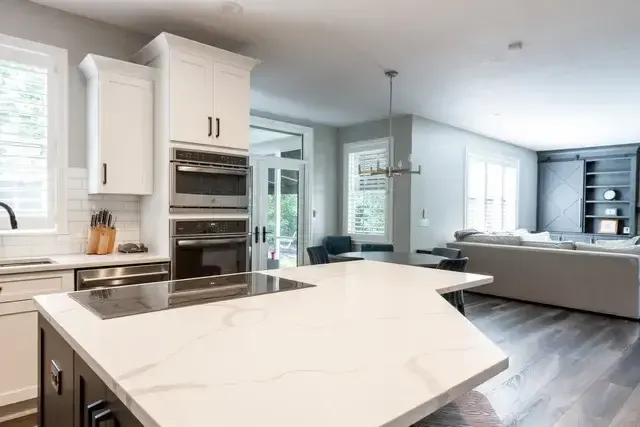
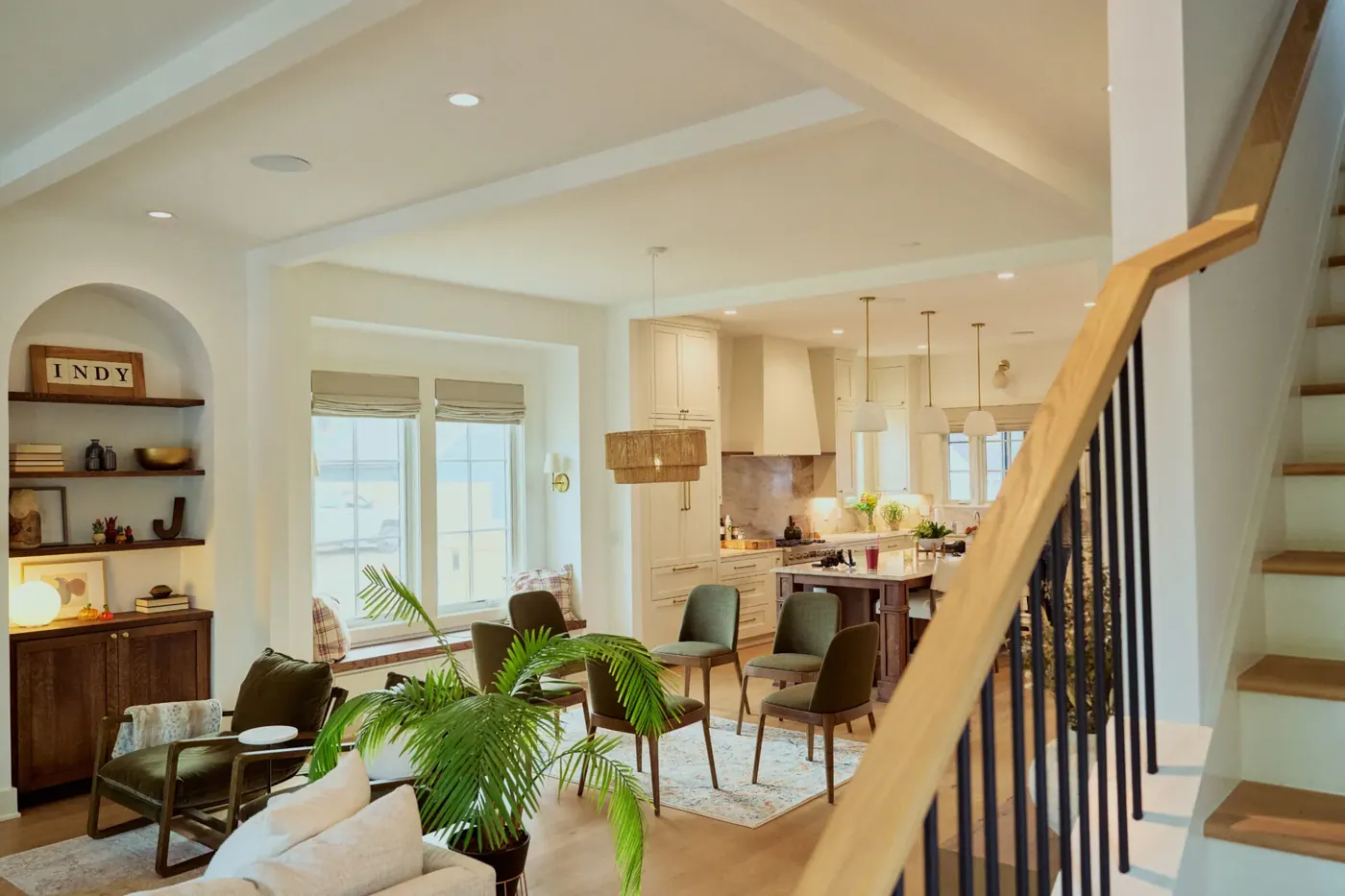
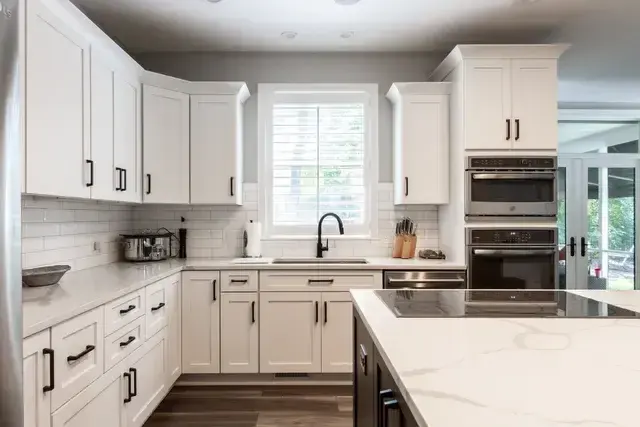
Photographs from real top-down bottom-up shades jobs completed by our crew in Franklin and surrounding areas.
What Top-Down Bottom-Up Shades Includes
Every Franklin job is documented item by item. Here is what the crew covers.
The honest hardware count stated at the measure: two rails, two lift paths and more parts than a single-lift shade
Which rail you will actually use daily talked through, since most people live in one or two positions
The sightline from the sidewalk checked with you standing in the room, because that is what sets the useful top rail height
Both stacks accounted for, the one at the head and the one that gathers under a lowered top rail
Glass left visible in the middle calculated before the order, so the open band is what you expected
Mounting depth measured for a deeper headrail, since two lift systems take more room than one
Three widths and three heights at every opening, with the diagonal read for square
Corded and cordless compared honestly, including how each one behaves when a rail drifts out of level
Cordless specified in rooms children use, since a corded dual-rail shade puts more cord in the room, not less
ANSI/WCMA A100.1-2022 cord access applied per opening rather than as one blanket line
Fabric opacity settled in writing, and the rail gap disclosed for anyone expecting blackout
Product family chosen for the room, cellular, pleated, a fabric fold or a woven natural
Weight checked against the finished size, because two rails and two lift paths add up on a wide unit
Light gap per side written on the paperwork, with the top rail position noted where it changes what you see
Rail leveling shown to you at handover so a drifted rail is a thirty second fix rather than a service call
Every opening in a room ordered together so fabric and hardware come off the same run
The contract written out in full, since IC 24-5-11 applies to residential work over $150 in this state
Both rails cycled through full travel at every window before we leave, top and bottom, twice
What Top-Down Bottom-Up Shades Cost in Franklin
Published national ranges put custom-fabricated shades at roughly $250 to $2,600 a window, with motorized units at roughly $300 to $1,500 per window installed. Those are national category figures rather than a quote for anything in Franklin. A top-down bottom-up shade prices above the same shade with a single lift, and the reason is straightforward: you are buying two lift systems, a second moving rail and the hardware that carries both. Expect the upgrade to be real rather than nominal. The fabric decision then applies as usual, since a blackout cellular costs more than a light filtering pleated. Adding a motor to a dual-rail shade costs more than motorizing a single-lift one, because there are two things to move. Franklin Window Treatments prices from measured openings across Johnson County.
How Top-Down Bottom-Up Shades Differ by Product
Every product in this trade behaves differently in a room. Here is what that means for this work.
Corded dual-rail lift: Two separate cord sets, one working the bottom rail and one working the top. It gives precise control of both rails and it puts the most cord and the most hardware into the window of any version we hang.
Cordless dual-rail lift: A spring system for the bottom rail and a second arrangement for the top, with nothing hanging beside the window. You move each rail by hand at the rail itself, which is what we specify wherever children are in the house.
Motorized dual-rail: A motor for each rail, so both positions are set from a remote or a keypad. It's the version that gets used daily on high or hard-to-reach windows, and it doubles the motor count, which shows up in both the price and the battery schedule.
Cellular top-down bottom-up: The most common build, because the cell structure stacks tightly at both ends and the fabric hides the second rail well. It's also the family with the DOE and ORNL energy testing behind the material itself.
Pleated top-down bottom-up: The lower cost version, with a single layer of pleated fabric rather than cells. It behaves the same way at both rails and gives up the trapped air pocket, which is worth saying plainly rather than leaving implied.
Fabric fold top-down bottom-up: A Roman-style shade with a movable top rail, so a formal room gets the same privacy trick without looking like a technical product. Folds stack deeper than cells, so the middle band of visible glass is narrower.
Woven natural top-down bottom-up: A bamboo or grass weave built with two rails. It looks striking and it stacks deepest of anything here, since natural material bundles rather than folds flat, so the finished size gets checked against the maker's limits first.
Room darkening fabric on a dual rail: A dense fabric on both rails, which gets a bedroom dim. The honest limit is where the two stacks meet under a lowered top rail, since that junction is hardware rather than a sealed edge and it passes a line of light.
Deeper headrail: The headrail on a dual-rail shade is larger than the one on a single-lift shade, because it houses two systems. That extra depth is the thing that most often turns a planned inside mount into an outside mount, so we measure for it early.
Outside mount with a real overlap: Mounted above and past the opening so the fabric laps the trim. On this product it does something specific: it lets the top rail drop below the head of the glass without exposing a lit gap at the sides of the opening.
See What Each Fabric Does To The Light
Pick a fabric below and the window updates. It's a drawing rather than a photograph, so read it as a rough guide to what each family does in a Franklin room, and to what it doesn't do.
Openness factor is a measured fabric spec, so you can compare it line to line. The category names are not measured. One maker's room darkening can behave like another maker's light filtering, which is why the sample books come to the measure and get opened in the room they're going in, at the hour that room has the problem.
Top-Down Bottom-Up Shades FAQ
Questions we hear most often from Franklin homeowners considering top-down bottom-up shades.
Top-Down Bottom-Up Shades Across Franklin
We measure and install in every one of these Franklin neighborhoods. Each has its own page with the build eras, window conditions and mounting notes for that section.
- Top-Down Bottom-Up Shades in Martin Place Historic District
- Top-Down Bottom-Up Shades in Franklin Commercial Historic District
- Top-Down Bottom-Up Shades in Franklin College Historic District
- Top-Down Bottom-Up Shades in Southbrook
- Top-Down Bottom-Up Shades in McCarty's Lakehurst
- Top-Down Bottom-Up Shades in Stonybrook
- Top-Down Bottom-Up Shades in Sugar Creek Heights
- Top-Down Bottom-Up Shades in J B Ramsey
- Top-Down Bottom-Up Shades in Kingsbridge
- Top-Down Bottom-Up Shades in Bluffs at Young's Creek
- Top-Down Bottom-Up Shades in Westwind at Cumberland
Other Window Treatment Services in Franklin
Franklin Window Treatments handles the full scope of window treatment work. Explore our other services below.
Schedule Your Free In-Home Measure in Franklin
Reach Us Directly
Our team prioritizes scheduled measures and service calls, and books in-home measures during business hours.
Ready to Book Your Measure?
Call us to set up an in-home measure, or to ask about a treatment that has stopped working. We will talk it through on the phone first.