Custom Drapery

Custom Drapery in Franklin, IN With Franklin Window Treatments

Panels that fix the proportion of a tall window

Call (317) 999-5154Get Free Quote
Quick Answer

Before you commit to this product, check the answers on lead time, care and warranty coverage. Those three are where expectations and reality most often diverge on a custom order.

  • Service: Custom Drapery for Franklin homeowners
  • Service area: Franklin, IN and surrounding areas
  • Honest structure: the measure happens on a normal appointment, the factory takes two to five weeks to build your order, and then we install. Service work on something already hanging moves much faster because nothing needs fabricating.
  • Insured and bonded
  • Serving Franklin, IN since 2008
Custom Drapery Services

Expert Custom Drapery for Franklin Homes

Drapery is the only treatment that fixes proportion, and Franklin's historic core needs that more than most. The pre-1940 stock, 1,084 units, carries tall narrow openings with height to width ratios well outside modern stock sizes, plus Queen Anne bays, oriels and the wide porch front triple of an American Foursquare. Panels hung wide of the opening make a narrow window read as a generous one and give a tall room its horizontal line back. Out on the newer edges the problem inverts: the vaulted great rooms of Franklin's 2000s plans hand you too much wall and too much height, and long panels are what bring that volume back to human scale.

Cost here is driven by yardage rather than by hardware, and fullness is the multiplier nobody explains. Specify 2.5 times fullness and the panel eats two and a half times its finished width in cloth, so raising fullness raises material cost in direct proportion before a seam is sewn. National ranges put custom drapery at roughly $300 to $4,000 per window, which is national rather than any published Johnson County figure. Two more honest points. Fabric relaxes after it hangs, so we hem on site days later rather than at the workroom. And dye lots move between production runs, so adding a panel next year rarely matches.

When to Call

Signs You Need Custom Drapery

If you notice any of these in your Franklin home, it is worth booking a measure. None of it is urgent, and none of it fixes itself either.

A cord loop hangs free in a toddler's room

Sun has faded the leading edge of a panel

Cooking smells have settled into the living room panels

Ready made lengths pool by accident on one wall

A cat has climbed the leading edge to shreds

Hems break unevenly across one wall

Panels hang over a register and have discolored

Voices carry and ring in a room with bare glass

Panels hang stiff with a crease in the wrong place

Closed drapery still lets a stripe of light through

Our Process

How Franklin Window Treatments Handles Custom Drapery

Every job follows the same five-step process. Transparent, thorough, and done right the first time.

1

Fullness chosen against the fabric

2

Pattern repeat and yardage figured

3

Pleat style and buckram specified

4

Folds dressed and tied to train

5

Full room yardage held in one lot

Real Project Photos

Custom Drapery in Franklin

Photographs from real custom drapery jobs completed by our crew in Franklin and surrounding areas.
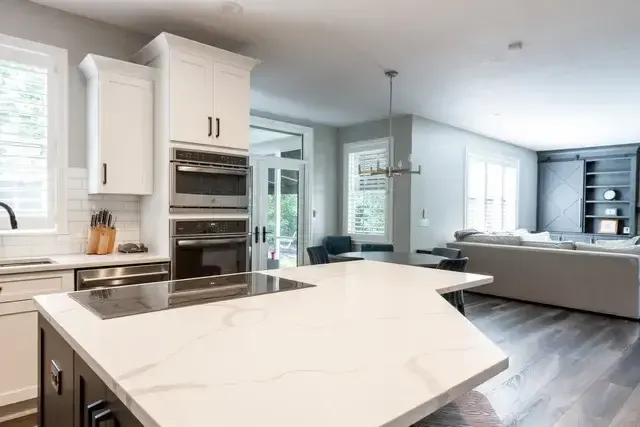
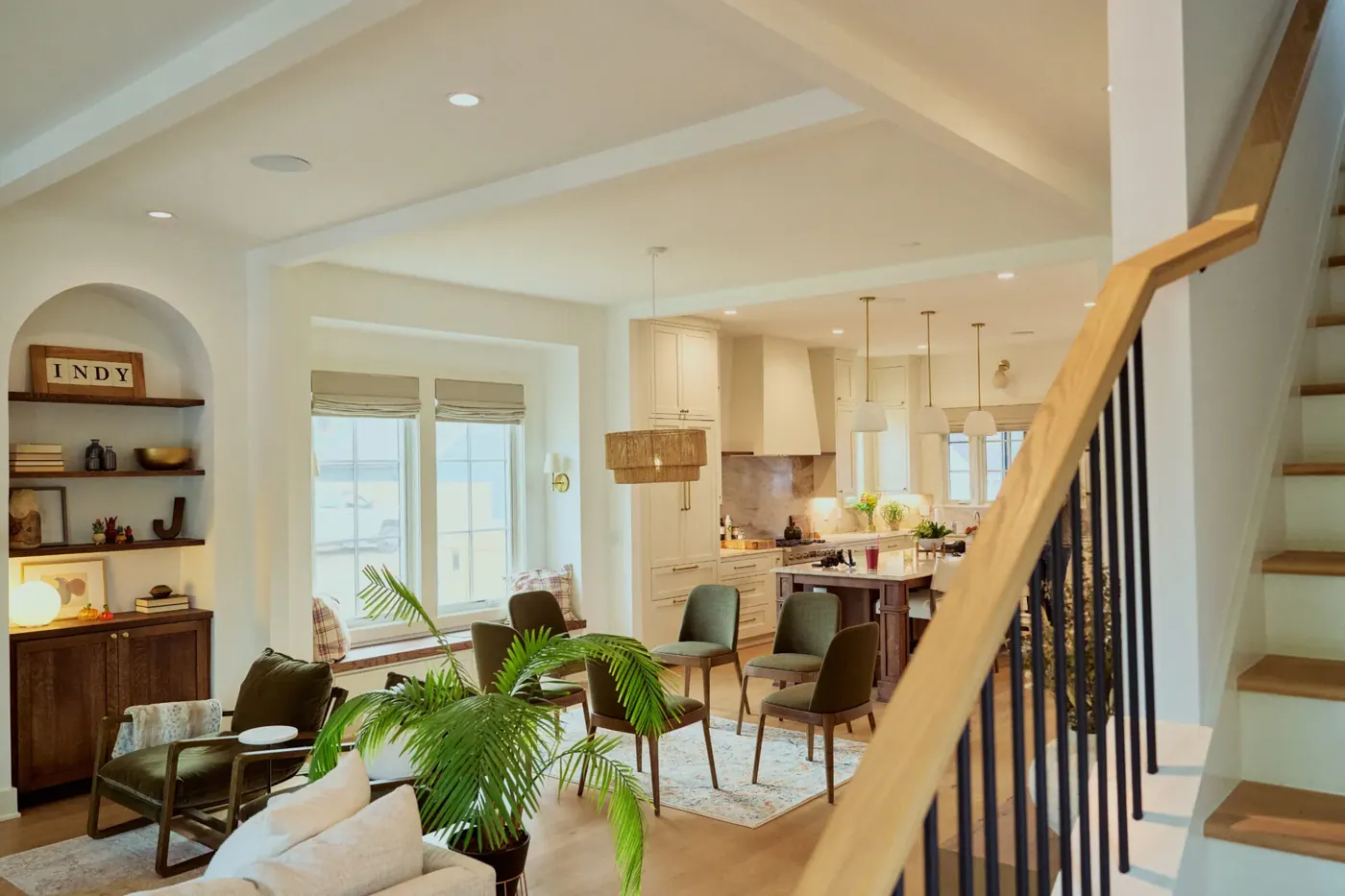
Custom shades measured and installed in FranklinPlantation shutters fitted to a Franklin windowCellular shades in a Franklin living room
Scope of Work

What Custom Drapery Includes

Every Franklin job is documented item by item. Here is what the crew covers.

Rod height and rod width set first, since where the hardware goes decides how the room reads

Finished length measured from the ring or hook down to the floor, at both ends and the center

Floor checked for level across the opening, because an out-of-level floor shows in the hem

Fullness chosen against the fabric and the look, commonly between two and two and a half times the rod width

Widths per panel calculated from fullness, fabric width and the seam allowance, then written on the order

Pattern repeat measured and yardage figured so motifs land at the same height on every panel

Pleat style specified per room, with a sample photo attached to the order so nothing is assumed

Buckram weight selected so the heading stands up instead of collapsing over the rings

Lining specified per elevation, plain, blackout or none, and stated in writing

Interlining added where the fabric needs body or where the room wants weight and quiet

Return depth and overlap at the center dimensioned so panels close without a gap down the middle

Stack back allowed for on the wall so open panels clear the glass instead of covering it

Rod, rings, brackets and finials selected as one set with the panel weight in mind

Mounting substrate found before install day so brackets land in framing or in an anchor rated for the load

Extra brackets added on long rods so the rod can't bow under a full set of lined panels

Hems weighted and corners squared so panels hang straight rather than kicking out

Panels steamed on site to drop fabric memory from folding and shipping

Panels dressed and tied for a few days so the folds train and each panel breaks the same way

Pricing

What Custom Drapery Costs in Franklin

Published national figures for custom drapery run roughly $300 to $4,000 per window. That's a national range for the category, not a quote for anything in Franklin, and drapery has the widest spread of anything we sell for a reason. Fabric is the largest single variable and it's priced by the yard, so fullness and panel count multiply whatever you choose. A large pattern repeat adds yardage before a single panel is cut. After fabric it's construction: lining, interlining, pleat style and hand finishing. Then hardware, which on a long span with heavy panels stops being decorative and starts being structural. Two windows of the same size in Johnson County can land at opposite ends of that range purely on cloth.

By Product

How Custom Drapery Differs by Product

Every product in this trade behaves differently in a room. Here is what that means for this work.

Pinch pleat: The traditional three-finger heading, hand-tacked and stiffened with buckram. It carries formal fabrics well and holds a deep, consistent fold. Specify it in dining rooms and primary bedrooms where the drapery is meant to look tailored.

Euro pleat: A two-finger pleat tacked at the top of the heading rather than the bottom, so the fold opens as it falls. It reads cleaner and more current than a pinch pleat while keeping the same structure behind it.

Goblet pleat: A rounded, stuffed pleat that stands proud of the heading. It's a decorative choice for tall rooms with real ceiling height, and it wants a fabric with enough body to hold the shape without slumping.

Ripplefold: Snap carriers on a track hold the fabric in a continuous S-wave with no pleats at all. It stacks tightly, it draws easily on wide spans, and it's the heading we reach for on a modern room or a long wall of glass.

Flat panel and rod pocket: The simplest headings. A flat panel on rings suits a stationary decorative panel, and a rod pocket suits a light fabric on a rod nobody plans to draw. Neither is built for daily operation.

Cotton sateen lining: The standard lining. It protects the face fabric from sun, gives the panel body so it hangs straight, and presents a consistent white or ivory face to the street from every window in the house.

Blackout lining: A dense multi-layer lining that stops light through the cloth. It adds real weight, which the rod and brackets have to carry, and it makes a bedroom noticeably darker even though light still comes around the panel edges.

Interlining: A soft flannel layer sewn between face fabric and lining. It adds drape, softens the fold, quiets the room a little and helps at a cold window in January. It's the difference between a nice panel and a luxurious one.

Decorative rod with rings: A visible rod, rings and finials, drawn by hand or with a baton. It puts the hardware into the design of the room. Panel weight decides diameter, material and how many brackets the span needs.

Traverse rod: A mechanical rod with carriers and a cord or baton draw, often concealed behind a heading or a valance. It's what you want when panels get closed every night and the hardware is meant to disappear.

Common Questions

Custom Drapery FAQ

Questions we hear most often from Franklin homeowners considering custom drapery.

A pinch pleat, usually, and the reason is the room rather than fashion. The Martin Place district runs from roughly 1850 to 1935, holding Italianate and Queen Anne houses alongside interwar Craftsman, and a French or a three finger pinch pleat is the vocabulary those rooms were built with. Ripplefold is a modern vocabulary and it sits badly against casing of that age. Goblet pleats suit a tall formal parlor with real ceiling height. Where the same house has a plain back addition, we will happily switch style between rooms, because the front of these houses and the back of them were built for different lives.
More than people expect, and fullness is why. Fullness is the ratio of flat fabric to finished width, so a 60 inch opening at 2.5 times fullness needs 150 inches of fabric across, plus returns and side hems, and the overlap where the panels meet. Then multiply by the drop plus hem and header allowances, and account for pattern repeat, which can waste a foot per cut on a large print. That is how a modest window turns into eight or nine yards. National drapery pricing runs roughly $300 to $4,000 per window across all specifications. We work the yardage in front of you rather than presenting a number.
Wide enough that the stacked panels clear the glass, which on the tall narrow openings in Franklin's pre-1940 stock is the whole point of hanging drapery there. As a rule we extend the rod eight to twelve inches past each side of the opening so the panels sit on wall rather than on glass when open. Returns carry the rod back to the wall at each end, which closes the light path down the side and stops the whole assembly looking like a stage set. An overlap in the center on a traverse rod closes the gap where two panels meet.
At minimum a standard lining, and on a genuinely hot wall an interlining as well. Franklin's July average high is 85.2 degrees and the section line grid puts a lot of houses on true east or west elevations: Southbrook fronts South Mauxferry Road, Sugar Creek Heights fronts South 600 East, and both run north south. Lining protects the face fabric, which is the real argument, because NFRC attributes 40 to 60 percent of fading damage to UV and a lining slows that considerably. It also gives the panel body so it hangs in a proper column. Fade is reduced, never stopped.
Because fabric moves once it takes its own weight, and the amount it moves depends on the fiber and the lining, and on the humidity in the room. Linen drops noticeably. Silk drops. Even a stable cotton settles a little. Franklin's muggy season runs roughly May 25 to September 22, and panels hung in August will sit differently in January. So we hang the panels long, leave them to relax for several days, then mark and hem on site to the floor line you actually want, whether that is a break, a float or a puddle. Hemming at the workroom guarantees a callback.
That pairing is the most efficient thing you can do to a window in Zone 5A. DOE and Oak Ridge testing found cellular shades saved up to 20 percent of heating energy and up to 15 percent of total heating and cooling energy against a bare window, and lined panels closed over the top add another still layer of air. The shade does the daytime work and the panels close at night, which is exactly when a January average low of 20.9 degrees matters. Mount the rod far enough off the wall to clear the shade headrail, and order both in one go for the dye lot.
Fullness is how much fabric goes across the rod compared with the rod's width. At two times fullness, a 100 inch rod carries about 200 inches of cloth. Most of our work lands between two and two and a half times, because that's where a panel looks full rather than skimpy and still stacks reasonably. Sheers often want more, since thin fabric needs the extra to read as fabric at all. Below two times, panels look flat when closed, and no fabric choice rescues that.
A width is one full cut of the fabric across the bolt, usually around 54 inches before seams. Panels are built by joining widths until you reach the fullness the rod needs. So a pair on a wide opening might be two widths per side, or three, and that number is what drives yardage and cost more than anything else. We write widths per panel on the order rather than leaving it as a vague description, so there's no argument later about how full "full" was.
Because the motif has to land at the same height on every panel, and to make that happen the cutter starts each panel at the same point in the repeat. Everything between panels gets trimmed off. A large repeat can add a meaningful chunk of yardage before anyone sews. This isn't waste in the careless sense, it's the cost of a room where the pattern lines up across four windows. We calculate it during the quote so the number doesn't appear later.
Buckram is the stiffener sewn into the top of the panel behind the pleats. It's what makes a heading stand upright and hold a crisp fold instead of flopping over the rings. Weight matters: too light and a heavy fabric drags the heading into a slump, too heavy and a light fabric looks boardy. It's invisible in the finished panel, which is exactly why it gets skipped in cheap work, and why a bargain drapery panel never quite looks right.
Almost always, and how they touch is the decision. A kiss break has the hem just meeting the floor and is the cleanest look for panels that get drawn every day. A slight break, half an inch to an inch of extra length, lets the fabric relax onto the floor and looks softer. A puddle is several inches and belongs on stationary panels in a formal room, not on anything you'll walk past. Floors are rarely level, so we measure the length at three points.
The return is the short section that wraps from the front of the rod back to the wall at each end, closing off the side. The overlap is where the two leading edges cross in the middle when the panels are shut. Skip either one and you get a stripe of light and a sightline into the room. Both need dimensioning at the measure, because the return depth depends on your bracket projection and the overlap depends on the hardware.
In something that will hold the load. A pair of interlined blackout panels on a wide rod is heavy, and it hangs off the wall on a lever arm, which multiplies the pull on the fasteners. We find framing where we can, use blocking where it exists, and use anchors rated for the load where it doesn't. Long rods get extra brackets so the rod can't bow. Drywall anchors chosen by guesswork are the single most common reason drapery ends up on the floor.
Because fabric remembers. Panels arrive folded, and those creases don't fall out on their own. We steam them on site, then dress the folds by hand and tie them loosely for several days so the cloth learns the shape. Untie them after that and each fold sits where it should. Skipping this step is why some drapery hangs with a stiff wave in the wrong place for years. It costs us an hour and it's the difference between finished and installed.
You can get blackout lining, and it's worth knowing what that does and doesn't do. The lining stops light coming through the cloth, so the panel itself goes dark. Light still enters around the panel: over the top, past the return if there isn't one, and through the gap at the center if the overlap is short. The reliable way to darken a bedroom in Franklin is blackout lined panels over a blackout shade with side channels. The drapery handles the softness and the shade handles the edges.
Rings on a decorative rod look better and are drawn by hand or with a baton. They suit panels that mostly stay open and get closed occasionally. A traverse rod has carriers and a mechanical draw, so panels that get closed every single night operate more smoothly and the fabric takes less handling. Ripplefold on a track is the third option and stacks tightest. We ask how often the panels actually move, then pick hardware that matches that answer.
More than most people plan for. Open panels have to go somewhere, and that stack is real: full fullness, multiple widths and a lining add up to a bundle of cloth several inches deep per width. If the rod stops at the edge of the opening, your open panels cover a chunk of the glass all day. We extend the rod past the trim on both sides so the stack lands on wall, which makes the window look larger and lets the daylight in.
Vacuum the face with a brush attachment a few times a year and steam out wrinkles rather than pressing them. When it needs more, use a dry cleaner who handles drapery specifically and takes panels down and rehangs them. Do not wash lined or interlined panels at home. The layers shrink at different rates and the hem goes wavy in a way that can't be fixed. Sun exposure ages fabric faster than dirt does, which is why we spec lining even on panels you'll never close.
Sometimes, and you should assume not. Fabric runs in dye lots, and a bolt woven next year can sit slightly off the one your panels came from. Two panels from different lots on the same wall will show it in daylight. If a second phase is coming, the right move is buying the yardage now, even if the sewing happens later. We'll record the fabric, the lot and the widths on your file either way, which at least gives the reorder a fighting chance.
Layering does more, and it's how most rooms end up. The shade handles the working part: glare, privacy and the edges of the window. The drapery handles softness, height and the way the room feels, and it stops a wall of hard treatments looking like an office. In a Franklin bedroom that combination gives you darkness the drapery alone can't deliver. In a living room, stationary panels beside a solar shade can be the whole job.
Free In-Home Measure

Schedule Your Free In-Home Measure in Franklin

Contact Information

Reach Us Directly

Our team prioritizes scheduled measures and service calls, and books in-home measures during business hours.

Office
1417 Commerce Avenue, Indianapolis, IN 46201
Hours
Mon-Fri 8a-6p
Service Area
Franklin, IN and Surrounding Areas

Ready to Book Your Measure?

Call us to set up an in-home measure, or to ask about a treatment that has stopped working. We will talk it through on the phone first.

Service area

Serving Franklin and the surrounding area

Call NowGet Quote