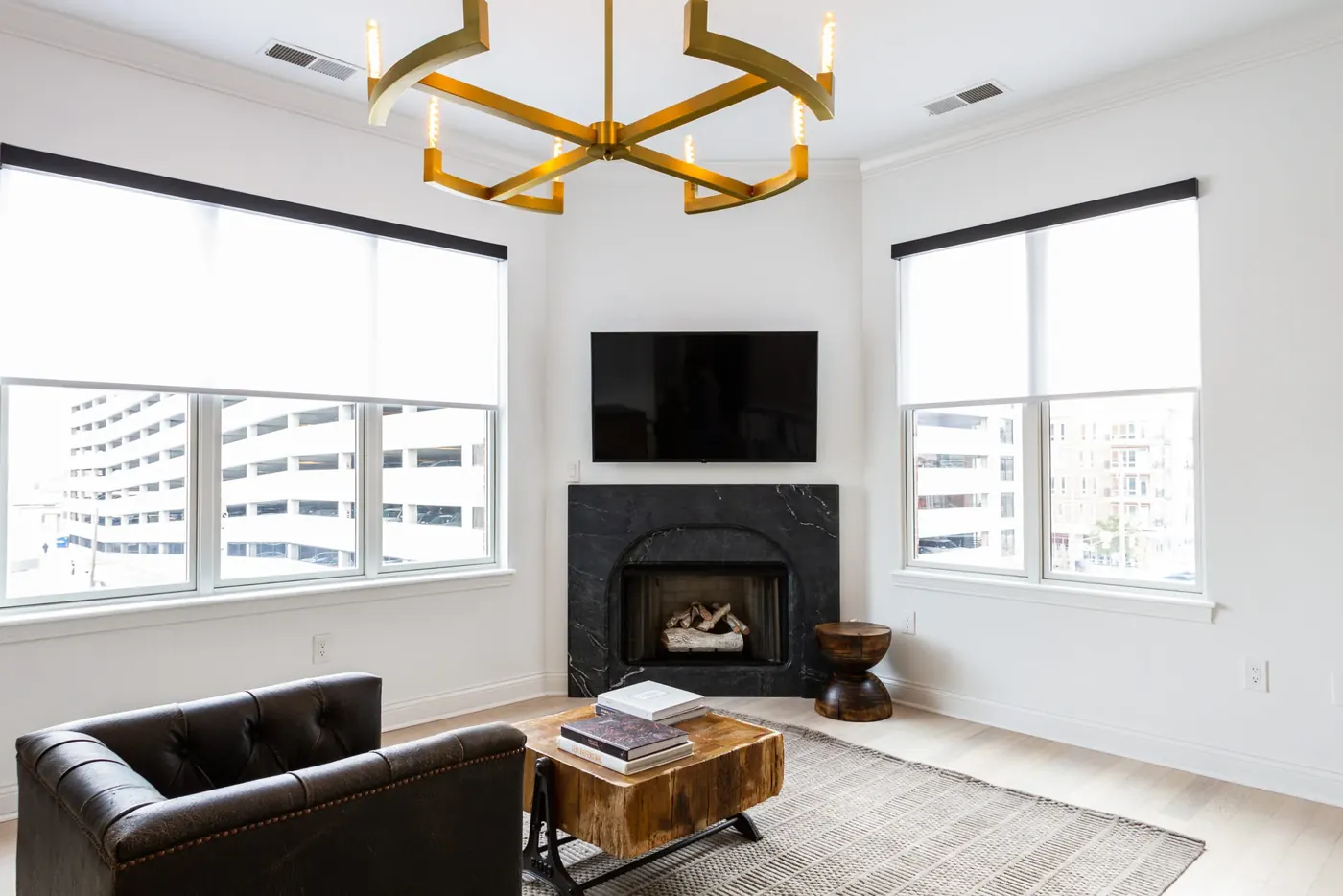
Motorized Shades in Franklin
Motors for stair hall and great room glass
Answers here cover the whole lifecycle: measuring, ordering, fabrication, installation, care and service. A custom window covering is a long-term purchase and the later stages deserve as much attention as the first.
- Service: Motorized Shades for Franklin homeowners
- Service area: Franklin, IN and surrounding areas A restring, a new cord lock, a tilt mechanism or a dead motor battery gets handled far faster than a new order, because nothing has to be built. New custom work runs on the factory's two to five week clock.
- Insured and bonded
- Serving Franklin, IN since 2008
Expert Motorized Shades for Franklin Homes
Motors earn their keep on the windows you cannot reach, and Franklin built plenty of them. Two story great room glass is documented in the 2000s plan generation, which produced 2,448 homes here between 2000 and 2009, the largest single decade at 23.8 percent of the city's stock. Kingsbridge is still building the same idea, with Lennar's 3-Car Venture series running 2,578 to 3,420 square feet on five and six bedroom plans. The other case is older: stair hall glass in the pre-1940 houses of the historic core, where rooms are lit from two sides and the landing window has never had a practical way to be operated.
Nobody brings up batteries at the sale, so we bring them up first. Hunter Douglas states PowerView battery life is about one year. In a great room with eight motorized shades, that is eight battery changes a year on windows you needed a motor for because you could not reach them. Options exist: a battery wand you can swap from a ladder, a trickle charge from a small panel, or hardwired power run during a renovation when walls are already open. Retrofitting power into a finished 1990s house means opening the wall. Radio range through masonry also drops, so a repeater is often needed.
Signs You Need Motorized Shades
If you notice any of these in your Franklin home, it is worth booking a measure. None of it is urgent, and none of it fixes itself either.
A shade sits behind furniture you have to move
Existing motors have stopped responding from the kitchen
Batteries died in February on the north side
You want the shades on a sunrise schedule
You want the west shades to follow the sun
Signal drops out crossing a brick wall inside
The hub brand stopped making the motors you have
A stair landing window hasn't moved in years
Cords hang within reach in a child's room
Afternoon sun hits art or a hardwood floor daily
How Franklin Window Treatments Handles Motorized Shades
Every job follows the same five-step process. Transparent, thorough, and done right the first time.
Hub and repeater placement planned
Travel limits set and re-checked
Accounts and passwords handed over
Battery change behavior tested on site
Shade map left in the house
Motorized Shades in Franklin
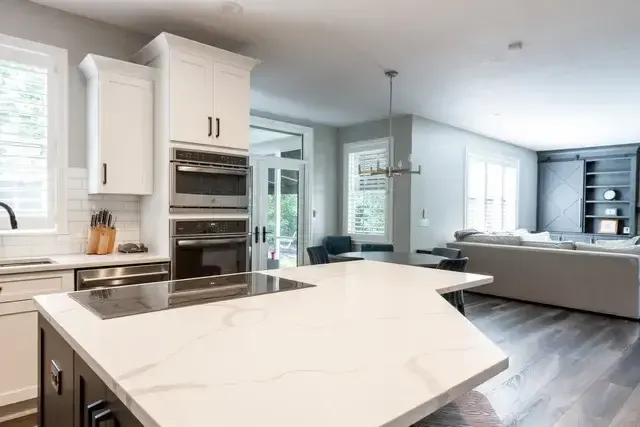
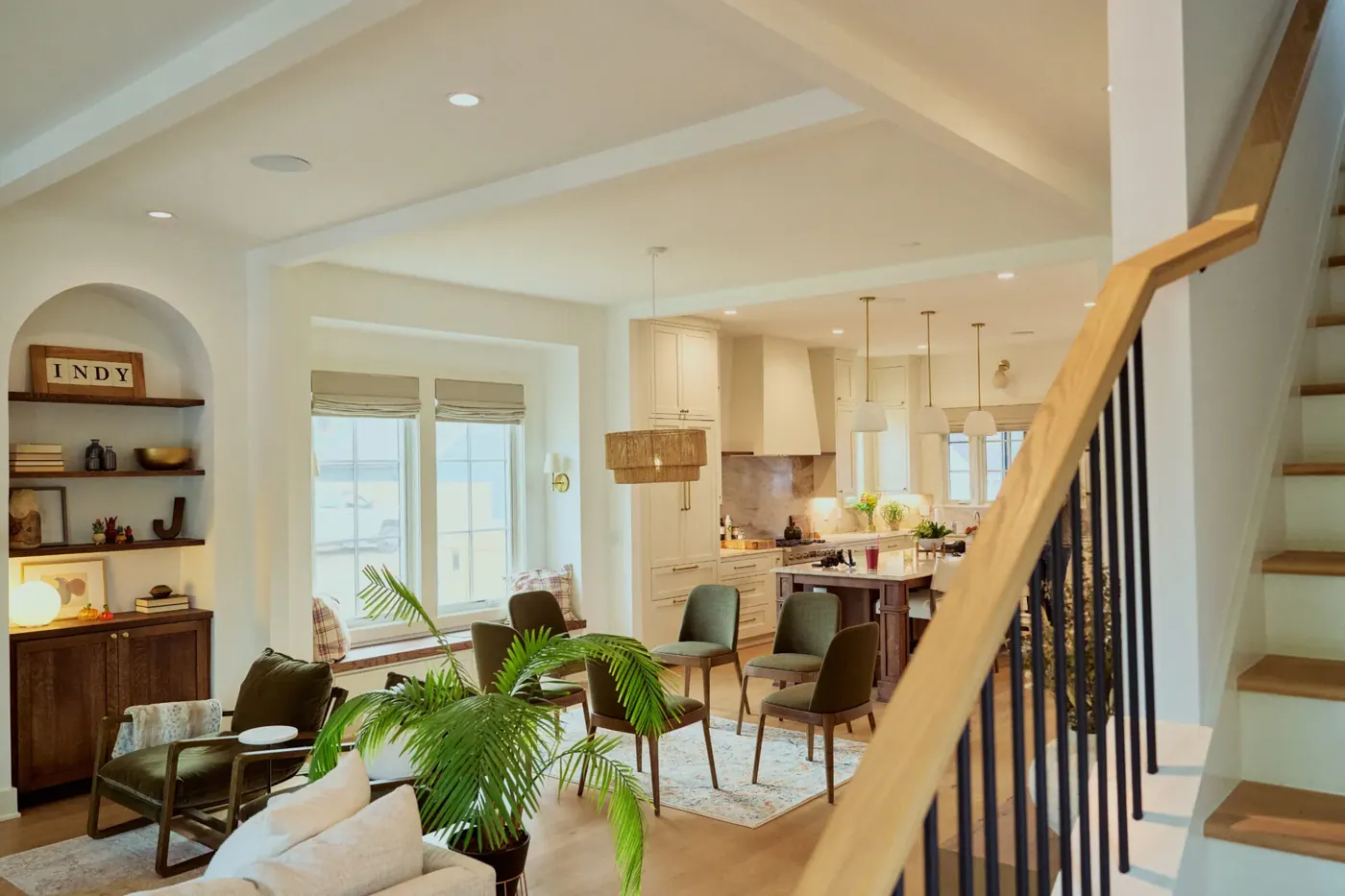
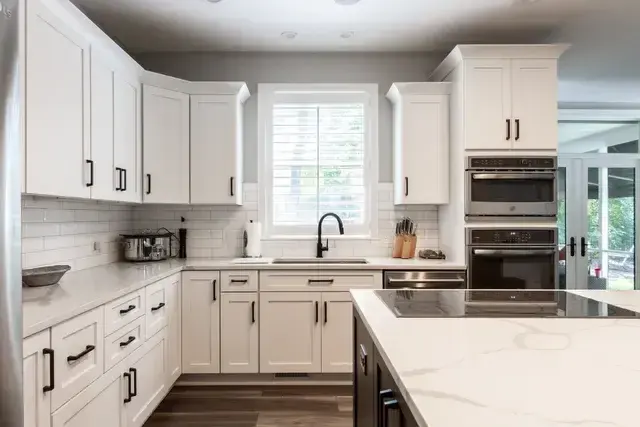
Photographs from real motorized shades jobs completed by our crew in Franklin and surrounding areas.
What Motorized Shades Includes
Every Franklin job is documented item by item. Here is what the crew covers.
Power method decided per window before anything else: battery, rechargeable or hardwired
Battery replacement cost and interval put in writing before the order, not after the install
Hardwired runs referred to a licensed electrical contractor, with our low-voltage locations marked for them
Radio path checked on site, since masonry, foil-faced insulation and metal studs all cut range
Hub or bridge placement chosen for signal, not for whichever shelf is closest to the router
Repeaters specified where a shade sits on the far side of a wall the signal won't cross
Protocol settled up front, plain RF for a standalone group or Zigbee, Z-Wave, Thread or Matter for integration
Three widths and three heights per opening with a diagonal square check
Mounting depth measured for the motor, the tube and any cassette or fascia
Roll direction and control side written on the order the same as any manual shade
Motors paired and addressed on site, then labeled so the next person can tell them apart
Travel limits set at the top and bottom of every shade and re-checked after the fabric relaxes
Scenes built with you in the room so the buttons match how you actually use the house
Sun sensors sited where they read real sun rather than shade from the eave
Astronomical timers set to local sunrise and sunset so schedules drift with the season
Remotes, keypads and app accounts handed over with the passwords in your name
A written walkthrough of how to re-pair a shade and reset a limit if you ever need to
Written contract with scope, dates and total price, as IC 24-5-11 requires on residential work over $150
What Motorized Shades Cost in Franklin
National figures for motorized window coverings run roughly $300 to $1,500 per window installed. Treat that as a national range for the category rather than a quote for your Franklin address, and know that the shade itself still follows fabric and size the way a manual one does. Motorization adds the motor, the power method and the control layer on top. A battery motor with a handheld remote is the least expensive path. Rechargeable batteries add a charger and sometimes a small solar panel. Hardwired costs the most because a licensed electrical contractor has to bring power to the header. Then there's the control side: hubs, repeaters, keypads, sensors. Franklin Window Treatments itemizes all of it so you can see what you're buying in Johnson County before you commit.
How Motorized Shades Differ by Product
Every product in this trade behaves differently in a room. Here is what that means for this work.
Alkaline battery wand: A tube of batteries inside or behind the headrail. It's the cheapest way to motorize and it needs no wiring at all. The cost lands later, in replacement batteries and in getting a ladder out to reach a tall window.
Rechargeable lithium battery: A removable pack you charge every so often, sometimes with a small solar panel doing a trickle charge at the window. It cuts the battery waste and the surprise, and it suits a house where the shades run several cycles a day.
Hardwired low-voltage motor: Constant power to the header, so nothing to charge and nothing to replace. It has to be planned before drywall or fished afterwards, and the power work belongs to a licensed electrical contractor rather than to us.
Point-to-point RF remote: A handheld that talks straight to the motors with no hub in between. It's the simplest thing that works, it keeps the shades off your network entirely, and it's the right call when nobody wants an app.
Hub or bridge: The box that puts your shades on the network so an app, a schedule or a voice assistant can reach them. Where it sits decides whether the far bedroom responds, so we place it for signal rather than for convenience.
Repeater: A small plug-in device that catches the radio signal and passes it along. Specify one when a shade is on the far side of a masonry wall, behind foil-faced insulation, or in a wing the hub can't reach cleanly.
Zigbee or Z-Wave: Mesh protocols where every mains-powered device extends the network. Choose one when the shades need to join an existing smart home rather than run as their own island, and match whatever the rest of the house already speaks.
Thread and Matter: The newer path for cross-brand control, with Thread as the radio mesh and Matter as the common language. It's the choice when you want shades to work with hardware from more than one manufacturer without a translator in the middle.
Sun sensor: A sensor that drops the shades when direct sun hits and raises them when it passes. It protects a floor or a piece of art on a hot elevation without anyone thinking about it, provided we site it where it reads real sun.
Astronomical timer: Scheduling tied to local sunrise and sunset rather than clock times, so the shades follow the season instead of needing a reset every few weeks. It's the single setting that makes automation feel considered rather than annoying.
See What Each Fabric Does To The Light
Pick a fabric below and the window updates. It's a drawing rather than a photograph, so read it as a rough guide to what each family does in a Franklin room, and to what it doesn't do.
Openness factor is a measured fabric spec, so you can compare it line to line. The category names are not measured. One maker's room darkening can behave like another maker's light filtering, which is why the sample books come to the measure and get opened in the room they're going in, at the hour that room has the problem.
Motorized Shades FAQ
Questions we hear most often from Franklin homeowners considering motorized shades.
Motorized Shades Across Franklin
We measure and install in every one of these Franklin neighborhoods. Each has its own page with the build eras, window conditions and mounting notes for that section.
- Motorized Shades in Martin Place Historic District
- Motorized Shades in Franklin Commercial Historic District
- Motorized Shades in Franklin College Historic District
- Motorized Shades in Southbrook
- Motorized Shades in McCarty's Lakehurst
- Motorized Shades in Stonybrook
- Motorized Shades in Sugar Creek Heights
- Motorized Shades in J B Ramsey
- Motorized Shades in Kingsbridge
- Motorized Shades in Bluffs at Young's Creek
- Motorized Shades in Westwind at Cumberland
Other Window Treatment Services in Franklin
Franklin Window Treatments handles the full scope of window treatment work. Explore our other services below.
Schedule Your Free In-Home Measure in Franklin
Reach Us Directly
Our team prioritizes scheduled measures and service calls, and books in-home measures during business hours.
Ready to Book Your Measure?
Call us to set up an in-home measure, or to ask about a treatment that has stopped working. We will talk it through on the phone first.