Measuring Tall Windows: What Goes Wrong and How to Avoid It
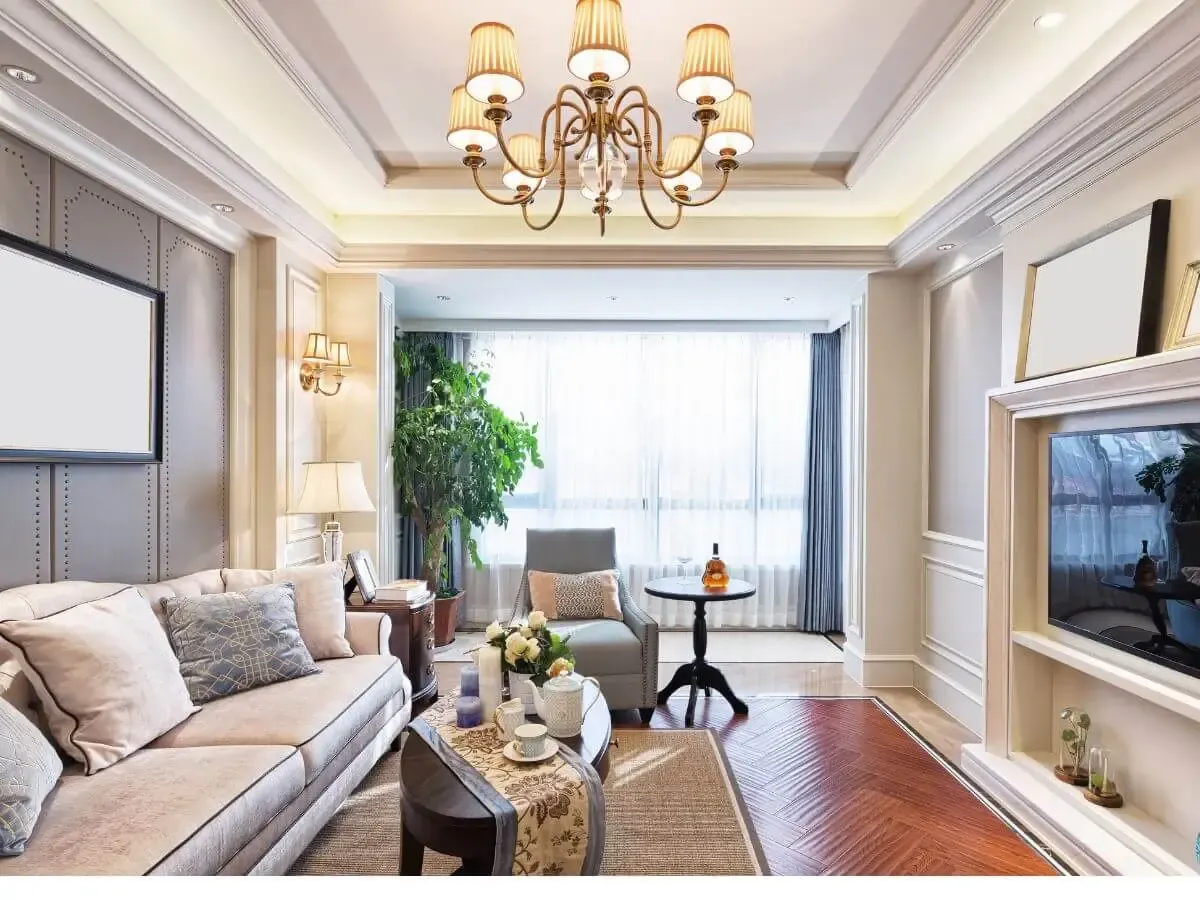
Some windows sit high enough or wide enough that operating them by hand stops being convenient and starts being genuinely impractical, and that's exactly the situation motorization was built to solve.
Why Size Pushes Hardware Past Its Limit
Most of the mistakes on a tall or oversized window trace back to treating it like a bigger version of a standard window instead of a genuinely different installation. Hardware rated for a six-foot drop doesn't automatically scale up safely to ten feet just because it's technically possible to order it in that length.
This shows up months after install more often than on day one. A shade that operates fine when it's new can start sagging or binding at the mechanism a year or two in, once the hardware in a Franklin home has spent enough cycles carrying weight it wasn't quite built for.
It's worth asking directly what weight and width rating a specific product line carries before ordering, rather than assuming a manufacturer's published specs apply the same way to every finish and fabric option within that line, since a heavier blackout lining can push a shade closer to its hardware's limit than a lighter fabric would.
Measuring and Installing on a Window That Big
Access equipment for measuring and installing a two-story or stairwell window adds a line item that a standard window measure never needs, whether that's a ladder rental or scaffolding, and it's worth asking upfront whether that cost is included in a quote or billed separately.
As a national range, factor in that oversized and hard-to-access installations commonly run toward the higher end of typical per-window installed pricing, sometimes with an added access fee on top, precisely because of the extra time and equipment involved. Getting a written breakdown before committing keeps a Franklin project from turning into a surprise final invoice.
A Franklin homeowner planning a great room renovation is often better off getting the window treatment quote at the same time as the rest of the room's construction quotes, rather than treating it as an afterthought once the walls are already finished, since access planning works better as part of the same conversation.
Whether motorization makes sense for a specific window is easier to judge in person than over the phone. A free in-home measure from Franklin Window Treatments can look at the actual reach and power access before recommending manual or motorized control.
One Shade or More Than One
Motorized shades handle a multi-shade setup especially well, since a single hub or app can group several shades together and raise or lower them in sync with one command, which matters more on a wide window wall than it does on a single window where manual operation was always going to be a one-at-a-time task anyway.
Grouping shades this way also means a Franklin household doesn't need a separate remote for every shade on the same wall. One control point operates all of them together while still allowing individual adjustment when only part of the wall needs to change, like closing just the shade nearest the afternoon sun.
The grouping software on most current systems is straightforward enough that a homeowner can set it up after install without help, creating custom groups for different times of day or different rooms without needing an installer to come back and reprogram anything.
Where All That Fabric Goes When It Stacks
Every shade that raises has to put the fabric somewhere, and on a tall window, that stack of raised fabric gets noticeably larger than it would on a standard window. A cellular or pleated shade with an eight or nine foot drop can stack up several inches of folded fabric at the top when fully raised, and that stack sits right in the sightline if the mount wasn't planned with it in mind.
This is why the mount location matters more on an oversized window than it does anywhere else. Mounting a headrail high enough above the frame to clear the stack, or choosing a lower-profile fabric that stacks tighter, keeps the raised shade from eating into the view on a Franklin window that was probably chosen for that view in the first place.
Reaching the Control on a Window That Tall
Configuration and control interact more than people expect. Multiple shades across a wide window mean multiple control points unless they're motorized and grouped together, so a manual multi-shade wall means walking to each section individually to adjust it, which gets old fast on a window wall used daily.
This is often the deciding factor that pushes a split configuration toward motorization even when a single shade on a smaller window would have been fine manual. Grouping several Franklin shades under one motorized control restores the single-shade convenience while keeping the hardware benefits of splitting the window into sections.
For a Franklin household weighing the cost of motorizing a split configuration, it's worth remembering that the convenience gap between one remote-controlled wall of shades and several individually operated ones is larger than the price difference usually suggests, especially for anyone who'd actually use the window wall every day.
Frequently Asked Questions
How tall does a window need to be before I need special hardware?
There's no single cutoff that applies to every product line, since different manufacturers rate their standard hardware differently, but as a general guideline, drops beyond roughly eight feet or widths beyond ten to twelve feet start pushing past what a lot of standard residential mechanisms are built for. Past that range, expect a conversation about reinforced tubes and heavier-duty clutches rather than a standard order.
Can I just order a wider or taller version of a normal shade?
You can usually order the size, since most manufacturers will make product to a wide range of dimensions, but ordering the size doesn't automatically mean the standard hardware handles it well. This is where a lot of disappointing results come from: a shade that technically fits the opening but sags or wears out faster than expected because the hardware wasn't upgraded to match the size.
Is motorization required for a very tall window, or just recommended?
It's not strictly required, since a long wand can technically operate a tall shade, but past a certain height it stops being practical. A wand extending eight or more feet is awkward to control precisely and often ends up dangling somewhere inconvenient. Most people who try manual control on a genuinely tall window end up motorizing it within a year anyway, so it's worth considering upfront.
 Retractable Awnings for Franklin Patios, Season by Season
 Common Cellular Shade Mistakes Franklin Homeowners Should Skip
 Covering a Sliding Door Without Getting in the Way of the Door