Inside Mount vs Outside Mount: Choosing the Right Fit for Your Franklin Windows
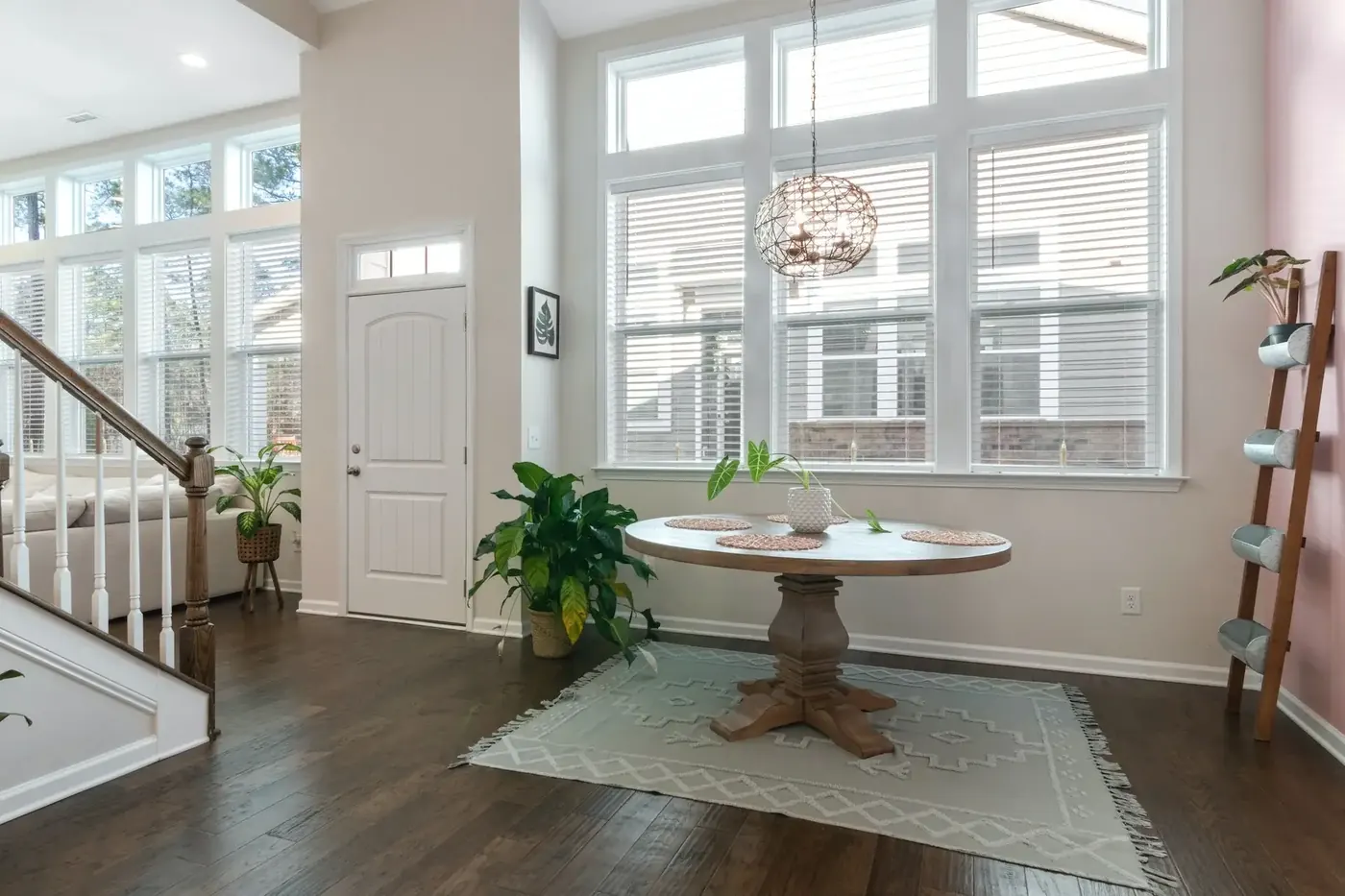
A blind that looks great in a showroom photo can look wrong on your own window if the mount doesn't match the opening. That mismatch is the single most common regret Franklin homeowners mention after a rushed order, and it almost always traces back to a five minute decision made too fast.
Inside Mount and Outside Mount, Defined
Two terms, one simple distinction. Inside mount means the hardware fits inside the window's frame opening, flush with the surrounding trim. Outside mount means the hardware attaches to the wall or trim in front of the window, covering the opening rather than sitting inside it. Every blind, shade, or shutter uses one of these two approaches, no exceptions.
A lot of the confusion homeowners run into isn't about the definitions themselves, it's about assuming the choice is purely a matter of taste. It isn't, not entirely. Plenty of Franklin windows have a frame too shallow, or an obstruction too awkward, for inside mount to even be an option, which means the decision is sometimes made by the window rather than the homeowner.
Knowing which situation you're in before you start shopping saves a lot of back and forth. A five minute depth check tells you whether you're picking based on taste or working within a constraint the window has already set.
Mixing Mounts and Getting a Consistent Look Room to Room
Here's a question worth asking before you assume the whole house needs to match: does it actually need to? Most of the time, no. A Franklin home with a mix of original and newer windows will often end up with inside mount in some rooms and outside mount in others, and that's a normal outcome rather than a compromise.
The better question to ask is whether rooms that share a sightline look coordinated. An open kitchen and living room combination reads better when the color and headrail style match, even if the mounting method underneath differs slightly, because that's what the eye actually registers from across an open floor plan.
Inside a single room, though, stay consistent across the windows in it if you can. Mixing mounts on windows that sit side by side on the same wall tends to look like an error rather than a decision, even when each individual choice was the right one for that specific opening.
Mount style is one of the few decisions in this whole process that's genuinely hard to get right from a photo or a guess. Book a free in-home measure, let someone check the depth and the trim in person, and order with an answer instead of a hunch.
Why Homeowners Choose Inside Mount
Inside mount is the default a lot of Franklin homeowners reach for because it looks clean and doesn't add bulk to the wall. If you've got nice trim you paid for, or a window with detail you want to keep visible, inside mount lets that trim keep doing its job instead of disappearing behind a headrail.
It also tends to work best in rooms where the shade needs to sit close to the glass, like a kitchen window over a sink where outside mount hardware might interfere with a faucet or a cabinet edge.
The tradeoff is real, though. Inside mount blinds show a small gap of light along the sides and sometimes the top, because the blind has to be built slightly narrower than the opening to physically fit inside it. In a nursery or a bedroom where you want the room fully dark, that gap can be annoying enough to change your mind.
Depth, Obstructions, and Other Mounting Realities
Whatever the room, the frame's actual depth overrides any preference. Faux wood blinds typically need 2 to 2.5 inches of clear space to sit inside a frame properly. Cellular shades can sometimes work with a bit less. Shutters need the most, generally 3 to 3.5 inches, because the panel frame adds real bulk inside the opening.
Kitchens and bathrooms are the rooms most likely to throw a curveball here, since they're also the rooms most likely to have cranks, locks, or plumbing eating into that depth. A bedroom window is usually simpler by comparison, with fewer obstructions to work around.
Sloped sills deserve their own mention, since they're easy to miss on a casual look. A sill that angles down toward the glass instead of sitting flat can make a blind sit crooked or rub against the glass with every use, even on a frame that measures deep enough on paper.
Why Homeowners Choose Outside Mount
Outside mount earns its keep by solving problems inside mount simply can't. A shallow frame, a lock or crank eating into the depth, a sill that isn't flat: any of these can rule out inside mount entirely, and outside mount sidesteps the whole issue by mounting to solid wall or trim instead of fighting for space inside the opening.
It also closes up the light gap. Because the shade extends past the frame on every side, there's no sliver of light sneaking around the edges the way there can be with inside mount. That matters most in bedrooms, and it's usually the deciding factor for anyone who's dealt with an inside mount shade that didn't quite block enough light.
One more advantage worth knowing: outside mount is forgiving of a frame that's out of square, which is common in older houses that have settled over the decades. Since the headrail mounts to a straight point above the opening rather than fitting snugly inside a crooked one, the whole installation gets a lot more predictable.
Frequently Asked Questions
How much depth do I need for an inside mount?
Most blinds and cellular shades need at least 2 inches of clear depth, and shutters usually want closer to 3. If your frame is shallower than that, or something like a crank handle or a sloped sill is in the way, outside mount is usually the better call.
Does outside mount block more light than inside mount?
Yes, generally. Outside mount hardware overlaps the frame on all sides, so it closes the light gaps you'd otherwise see around an inside mount blind. If a dark bedroom matters to you, that overlap is doing real work.
Can I switch from inside mount to outside mount later?
Usually, yes, since outside mount hardware attaches to the wall or trim rather than inside the frame. Going the other direction is harder, since it depends on depth that either exists or doesn't.
 Retractable Awnings for Franklin Patios, Season by Season
 Common Cellular Shade Mistakes Franklin Homeowners Should Skip
 Covering a Sliding Door Without Getting in the Way of the Door